
What is non-muscle-invasive bladder cancer?

Non–muscle-invasive bladder cancer (NMIBC) is a type of bladder cancer that stays within the lining of the bladder.

“Non-muscle-invasive” means the cancer is present in the bladder, but has not yet spread into the layer of muscle that surrounds the bladder wall. Doctors may categorize NMIBC using stages (Ta, Tis, or T1), and also risk levels (low, intermediate, or high).

AstraZeneca is committed to the treatment of all types of bladder cancer, from non-muscle-invasive to muscle-invasive bladder cancer.

Bladder cancer may fall under 2 categories:

In non-muscle-invasive bladder cancer (NMIBC), cancer cells stay within the inner lining of the bladder and do not grow into the muscle layer of the bladder.

In muscle-invasive
bladder cancer (MIBC)
, cancer cells spread into or through the muscle layer of the bladder wall and may spread to other parts of the body.

Learn about MIBC

This website focuses on NMIBC.

What are the stages
of NMIBC?

Non–muscle–invasive bladder cancer is sometimes categorized based on stage and risk group. These categories help tell more about where the cancer is and how likely it is to come back or progress further after treatment.

To find the cancer stage and risk group, a doctor will remove the cancer through a procedure called transurethral resection of the bladder tumor (TURBT). TURBT is a minimally invasive procedure where your doctor removes the cancer by going through your urethra, the canal that allows urine to leave your body.

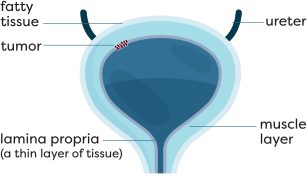
Cancer has grown into the inner lining of the bladder.
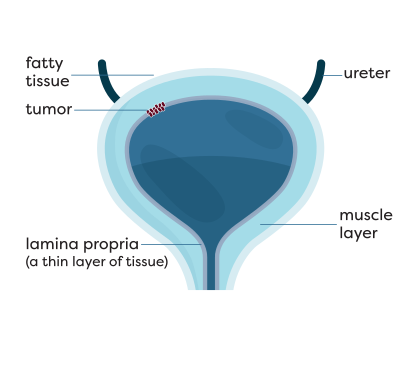
Stage Tis Diagram

Stage Tis Diagram

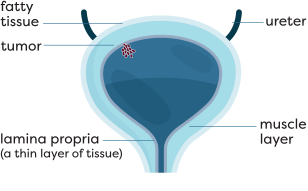
Cancer is in the center of the bladder but has not grown into the tissue layer or muscle wall.
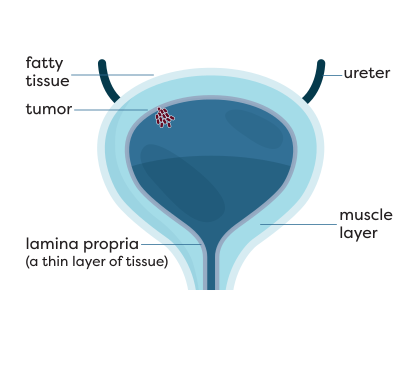
Stage Ta Diagram

Stage Ta Diagram

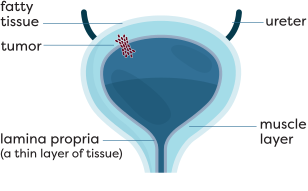
Cancer has grown into the tissue layer.
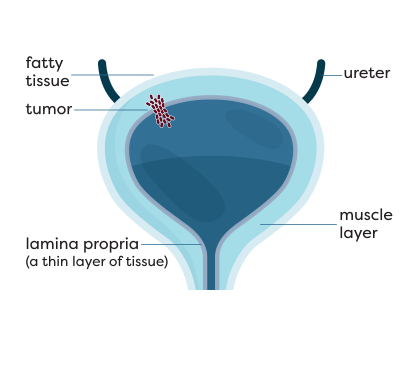
Stage T1 Diagram

Stage T1 Diagram

How do I understand my risk group for NMIBC?

Staging describes where the cancer has spread, and it may also determine risk groups for NMIBC. Risk groups help classify the cancer into 3 categories based on the stage of the cancer, the size of the tumor(s), and whether it is likely to come back after treatment.

Low risk

Cancer is less likely to come back after treatment or progress further.

Intermediate risk

Cancer may come back after treatment or progress further.

High risk

Cancer is likely to come back after treatment or progress further.

Icon

High-risk NMIBC looks different from person to person, and each doctor may define it differently. It's important to talk to your doctor to learn more about your risk group.

If your NMIBC has been classified as high-risk, talk to your doctor about treatments, like IMFINZI, that may work for you.

Learn how IMFINZI is given

Meet the members of your care team

Who treats NMIBC?

Helpful highlights: How NMIBC is Diagnosed and Staged

Let's review:

  • Doctors use a procedure called transurethral resection of the bladder tumor (TURBT) to identify the cancer’s stage (Ta, Tis, or T1) and risk level (low, intermediate, or high)
  • Risk groups help classify the cancer into 3 categories based on the stage of the cancer, the size of the tumor(s), and whether it is likely to come back after treatment
  • “High-risk” NMIBC means that the cancer is likely to get worse or return, even if successfully treated

Questions to discuss with your care team:

  • What is the goal of treatment for non-muscle-invasive bladder cancer?
  • What does it mean that my cancer is considered “high-risk”?
  • What may cause non-muscle-invasive bladder cancer (NMIBC)?
  • What are the differences between NMIBC and MIBC?

Important Safety Information

What is the most important information I should know about IMFINZI® (durvalumab)?

IMFINZI is a medicine that may treat certain cancers by working with your immune system. IMFINZI can cause your immune system to attack normal organs and tissues in any area of your body and can affect the way they work. These problems can sometimes become severe or life-threatening and can lead to death. You can have more than one of these problems at the same time. These problems may happen anytime during treatment or even after your treatment has ended.

Call or see your healthcare provider right away if you develop any new or worsening signs or symptoms, including:

What is IMFINZI?

IMFINZI is a prescription medicine used in combination with Bacillus Calmette-Guérin (BCG) to treat a type of bladder cancer called high-risk non-muscle invasive bladder cancer (NMIBC) that has not spread into the muscle layer of the bladder, when you have not had prior treatment with BCG.

It is not known if IMFINZI is safe and effective in children.


  • ISI Lungs Problem Symptoms

    Lung problems: cough, shortness of breath, and chest pain

  • ISI Intestinal Problem Symptoms

    Intestinal problems: diarrhea (loose stools) or more frequent bowel movements than usual; stools that are black, tarry, sticky, or have blood or mucus; and severe stomach-area (abdomen) pain or tenderness

  • ISI Liver Problem Symptoms

    Liver problems: yellowing of your skin or the whites of your eyes, severe nausea or vomiting, pain on the right side of your stomach area (abdomen), dark urine (tea colored), and bleeding or bruising more easily than normal

  • ISI Hormonal Gland Symptoms

    Hormone gland problems: headaches that will not go away or unusual headaches; eye sensitivity to light; eye problems; rapid heartbeat; increased sweating; extreme tiredness; weight gain or weight loss; feeling more hungry or thirsty than usual; urinating more often than usual; hair loss; feeling cold; constipation; your voice gets deeper; dizziness or fainting; and changes in mood or behavior, such as decreased sex drive, irritability, or forgetfulness

  • ISI Kidney Problem Symptoms

    Kidney problems: decrease in your amount of urine, blood in your urine, swelling of your ankles, and loss of appetite

  • ISI Skin Problem Symptoms

    Skin problems: rash; itching; skin blistering or peeling; painful sores or ulcers in mouth or nose, throat, or genital area; fever or flu-like symptoms; and swollen lymph nodes

  • ISI Pancreas Problem Symptoms

    Pancreas problems: pain in your upper stomach area (abdomen), severe nausea or vomiting, and loss of appetite

  • ISI Other Organ Problem Symptoms

    Problems can also happen in other organs and tissues. These are not all of the signs and symptoms of immune system problems that can happen with IMFINZI. Call or see your healthcare provider right away for any new or worsening signs or symptoms, which may include: Chest pain, irregular heartbeats, shortness of breath or swelling of ankles; confusion, sleepiness, memory problems, changes in mood or behavior, stiff neck, balance problems; tingling, numbness or weakness of the arms or legs; double vision, blurry vision, sensitivity to light, eye pain, changes in eye sight; persistent or severe muscle pain or weakness, muscle cramps, joint pain, joint stiffness or swelling; and low red blood cells and bruising

  • ISI Infusion Reaction Signs and Symptoms

    Infusion reactions that can sometimes be severe or life-threatening. Signs and symptoms of infusion reactions may include: chills or shaking, itching or rash, flushing, shortness of breath or wheezing, dizziness, feel like passing out, fever, and back or neck pain

  • ISI Organ or Tissue Transplant Rejection

    Rejection of a transplanted organ or tissue. Your healthcare provider should tell you what signs and symptoms you should report and monitor you depending on the type of organ or tissue transplant that you have had

  • ISI Organ or Tissue Transplant Rejection

    Complications, including graft-versus-host disease (GVHD), in people who have received a bone marrow (stem cell) transplant that uses donor stem cells (allogeneic). These complications can be serious and can lead to death. These complications may happen if you underwent transplantation either before or after being treated with IMFINZI. Your healthcare provider will monitor you for these complications

Getting medical treatment right away may help keep these problems from becoming more serious. Your healthcare provider will check you for these problems during your treatment with IMFINZI. Your healthcare provider may treat you with corticosteroid or hormone replacement medicines. Your healthcare provider may also need to delay or completely stop treatment with IMFINZI if you have severe side effects

Before you receive IMFINZI, tell your healthcare provider about all of your medical conditions, including if you:

  • have immune system problems such as Crohn's disease, ulcerative colitis, or lupus
  • have received an organ or tissue transplant, including corneal transplant
  • have received or plan to receive a stem cell transplant that uses donor stem cells (allogeneic)
  • have received radiation treatment to your chest area
  • have a condition that affects your nervous system, such as myasthenia gravis or Guillain-Barré syndrome
  • are pregnant or plan to become pregnant. IMFINZI can harm your unborn baby

      Females who are able to become pregnant:

    • Your healthcare provider will give you a pregnancy test before you start treatment with IMFINZI.
    • You should use an effective method of birth control during your treatment and for 3 months after the last dose of IMFINZI.
      Talk to your healthcare provider about birth control methods that you can use during this time.
    • Tell your healthcare provider right away if you become pregnant or think you may be pregnant during treatment with IMFINZI.
  • are breastfeeding or plan to breastfeed. It is not known if IMFINZI passes into your breast milk. Do not breastfeed during treatment and for 3 months after the last dose of IMFINZI.

Tell your healthcare provider about all the medicines you take, including prescription and over-the-counter medicines, vitamins, and herbal supplements.

What are the possible side effects of IMFINZI?

IMFINZI can cause serious side effects (see above).

The most common side effects of IMFINZI when used with Bacillus Calmette-Guérin (BCG) in adults with high-risk NMIBC
include increased liver function tests, urinary tract infection, increased level of potassium in blood, pain or discomfort with urination, decreased red blood cells (anemia), blood in urine, increased level of creatinine in the blood, muscle or bone pain, decreased lymphocyte counts, urinate more often, decreased level of sodium in the blood, feeling tired, rash, and fever.

Tell your healthcare provider if you have any side effect that bothers you or that does not go away. These are not all the possible side effects of IMFINZI. Ask your healthcare provider or pharmacist for more information.

Call your doctor for medical advice about side effects. You may report side effects related to AstraZeneca productsReport side effects related to AstraZeneca products. If you prefer to report these to the FDA, either visit www.FDA.gov/medwatch or call 1-800-FDA-1088.

Call your doctor for medical advice about side effects. You may report side effects related to AstraZeneca productsReport side effects related to AstraZeneca products. If you prefer to report these to the FDA, either visit www.FDA.gov/medwatch or call 1-800-FDA-1088.

Please see Full Prescribing Information including Medication Guide for IMFINZI.

What is IMFINZI?

IMFINZI is a prescription medicine used in combination with Bacillus Calmette-Guérin (BCG) to treat a type of bladder cancer called high-risk non-muscle invasive bladder cancer (NMIBC) that has not spread into the muscle layer of the bladder, when you have not had prior treatment with BCG.

It is not known if IMFINZI is safe and effective in children.

Please see Full Prescribing Information including Medication Guide for IMFINZI.

Top
 
Minimize

Important Safety Information

What is the most important information I should know about IMFINZI® (durvalumab)?

IMFINZI is a medicine that may treat certain cancers by working with your immune system. IMFINZI can cause your immune system to attack normal organs and tissues in any area of your body and can

IMFINZI is a medicine that may treat certain cancers by working with your immune system.

Read full Important Safety Information

What is IMFINZI?

IMFINZI is a prescription medicine used in combination with Bacillus Calmette-Guérin (BCG) to treat a type of bladder cancer called high-risk non-muscle invasive bladder cancer (NMIBC) that has not spread into the muscle layer of the bladder, when you have not had prior treatment with BCG.